Showing posts with label Politics. Show all posts

Saturday, 11 April 2020

So where do we go from here?

... to be fair, I don't really know ...

No one does. 

The exploration of possible answers to the question I start with requires much more than 240 character Tweets or to browse though Instagram pictures. Certainly we need much more stamina to sit, read and explore than seems to be the trend on many (most?) social media platforms. Blogging, perhaps is viewed as slightly old school, so much change has happened in the way we spread and share information over the past few years. 

I know that I have changed; my priorities, day to day worries and concerns have changed.  The way I interact with the world; be it the real world or the virtual world has changed. People around me have changed and I have lost people whom I thought would forever have been there. 

As I've soldiered on through my 40s, some things have become very real - mortality, uncertainty and illness, questions around long established relationships, new relationships, personal ambitions, identity politics, political populism and media influence, culture, tech surveillance and as I write - global pandemics. So how do we deal with these issues? Where do we stand? Where should we stand? 

Essays, conversations, snippits, therapy and social media - I've continued share. I'm not altogether sure I am anywhere nearer the answers, but I know that I am not alone in my thoughts. So when the gloves are off, and I'm free to speak, I shall return to this space to explore - my outlet and my connection. 

Stick around.


Sunday, 18 May 2014

The Truth is Out There

Throughout history, notable events have occured when people have found a way to challenge the status quo often by opposing (even breaking with) social customs and the law. I'm not on that level of opposition so in some respects, I am to blame for developing a sense of 'switchedoffness'. I should challenge what is not right or what conflicts with my inner beliefs. I have the power of protest because of where I live and should use it, I remind myself. I was raised in a democracy and presumably I have the freedom of speech that others don't. Privileges that make me fortunate as well as responsibilities that come with those privileges.

And yet a few days back, I sat through a very uncomfortable meeting on the matter of 'extremism'.  You know, the whole argument about anti-establishment information being drip fed into young minds by anti-state agents. Typically, Islam comes up (in truth, isn't Islamic ideology what this is all about?) though they throw in the other objectionable - right-wing Nazi-sympathy - (a late addition to the topic) as some kind of neutralising factor so that the Muslims in the audience don't feel that they are under seige.

It's true; extremists exist. And they do much damage - take a look at Syria, Afghanistan, Pakistan, Nigeria etc. There must be a counter narrative to challenge blinkered thinking - a free education system that allows people to make up their own minds in these places - sometimes backed with counter actions (intelligence). But on this occasion I sat through this meeting, democracy, freedom and all, and I felt like the most disempowered person there is. I remained silent, unable to speak up but also torn between what I know/feel is happening to what I am being told. My problem is that continually, the freedom to speak out in protest of government policy, to voice an alternative view, is being marginilised under the weight of the media that cherry picks its commentary when reporting major world events. Remember, they filter the news for us and as most people passively consume, we don't often think about the after effects.

Why is it that the popular counter narrative to extremism (headed by the likes of Malala Yousafzai etc.) now feel like the conflict of an old establishment with its own less-than-benevolent interests against newer forms of protest against them? Why is it, that despite my clear revulsion at the tactics employed by militants (Taliban, Boko Haram* etc.), I think that there is an argument that they should be part of the dialogue for building long term peace? Why is it that I just don't trust the media, the motives of governments driven by capital interests and their third world stooges when they claim that they are fighting for 'freedom' and 'democracy'?

Damn it. I live in a democracy, but dare I speak in favour of something that runs counter to the popular narrative, then I'll be lumped with the extremists that I object. Despite the hundreds of TV channels, most converge at the same place. And despite the millions of websites, the vast majority again, spout a narrative that has been predecided. Dare anyone seek an alternative view? IPs are tracked, web-searches are indexed and profiles are built. It begins, over time, to erode one's confidence to speak up and certainly affects my confidence in state instutions. I'm reluctant now to believe in much of what I'm being told and have learned the art of silence. Extremists/counter-extremists; I don't think that we are in a safer, better world, but not for the reasons that we are told. In a way, my freedom of thought is my most precious freedom, but it is isolating and useless without the freedom to speak up.

The truth, as they say, is out there.

 Image: The Haunted Man

*Read here for an alternative on the Nigeria situation: 'Dear World, Hashtags won't #BringBackOurGirls'

Sunday, 27 October 2013

'Free' Schools

I learned a long time ago to trust my own judgement and instincts and this has been at odds with the system I have found myself in over the recent past. In fact, over the last year, one of the things I have increasingly noticed about schools is how conditioned teachers can be. I don't know about others, but I resent operating within a straight-jacketed learning environment. So, last week, when I was offered another role at another school outside the state system, I confess to some sense of relief. It remains to be seen how much there will be an attempt to quash individuality, but having worked in three continents in many schools delivering different curricula, I think it is fair to say that I am able to pick and choose with some sense of informed accuracy and experience.

The demand for alternative types of schooling indicates how many of us believe that there are many forms of education that offer a much wider (or specific) set of experiences for acquiring skills and knowledge. Within this broad range, in schools that do not operate under direct state or local authority control (such as free schools, academies, home-schooling, independent schools etc.), a 'teacher' may not have a state-issued certificate or teaching license.

How important is this? In short, a teacher is someone who inspires, motivates, cares, and is willing to impart their skills and knowledge. By virtue, anyone who does this, from parent, to a highly-skilled artist, to a classroom practitioner or a colleague, is a teacher. It is not necessarily someone who has spent hours studying at an institution being trained in pedagogy and educational ideology. In fact this process of training may institutionalise them and narrow them as teachers by removing their openness and passion.

It is rather surprising then that the Deputy PM, Nick Clegg should have spoken this week about ensuring that all teachers in free schools needing to be 'qualified' (i.e.'certified'). Do we mean ideologically programmed to lack an alternative view? This too, from a man who was educated privately (that is, outside the state system) where there are more creative educational freedoms? It all sounds rather hypocritical, both for him to speak and for him to expect. I speak as a 'certified'/'qualified' teacher (UK/EU) who is passionate about the rights of educators for sound pay and conditions where clearly that is not what he is speaking of.

There has been something of an understandable media backlash over the past few weeks on 'free schools' following investigations into mismanagement, quality of service or misappropriation of budgets. I am not here to defend this or previous government's educational policies and understand that there is that element of controversy when it comes to public money being spent on alternative education. That is a completely separate issue. I strongly believe, however, in the principle that freedom in education is what makes it so appealing and worth fighting for and that many of the most enriching experiences for children/students do not necessarily stem from the institutionalised forms of education.


Saturday, 19 October 2013

Elephant in the [Class] Room


Daniel Hoffman-Gill offers an interesting opinion on the alienation of the white working classes in the UK. Essentially, he does not want to see this group left behind and the comments that follow his blog posting highlight the differing (read 'divisive') points of view on the issue. Whatever we think however, it remains true, that white working class children have the lowest levels of academic achievement in schools and remain the most socially immobile of all the demographic groups within the UK (see the Joseph Rowntree Report). Invariably, schools that take these children in will have a bigger cultural issue to tackle in their communities that they serve and are challenged with breaking a culture of low aspiration at the individual, parental and societal level. It's a tall order.  

Sir Robin Bosher of the Harris Federation of Academies, describes his findings: "I see about 10 per cent in each class who are so unsociable that they hurt others, adults and other young children. But they’re unsociable because they’ve no practice at being sociable." Compare that to other 'poor' groups - European Muslim migrants, people learning in a non-native language and so on. Think also of people in the developing world who live a hand-to-mouth existence who also start off with disadvantage. The difference is, in general, these groups tend to value education and see it as a key to social mobility. 

As an educator, with a body of experience in several countries, it goes without saying that I believe that education is an important means to meet the needs of the wider social good. I cannot ignore, however, that in England education is way too (negatively) politicised and this makes education as a public service vulnerable to constant government manipulation. The challenges, however, of being at the chalk-face on a daily basis means that educators have a different perspective on the social matters that children bring into school and meeting the needs of the white working class is not as simple as another set of reforms. 

It would be fair to conclude that essentially 65 years of exhaustive educational reform in the UK has not delivered on closing the educational achievement gaps for white working class children or driving up their aspirations. The occasional examples that highlight traditionally working class people being the first in their families to access higher education are something of an illusory distraction. Progress to university remains a mainly upwardly mobile, middle-class aspiration. 

The social mobility arguments remain at the cornerstone of the 'moral purpose' behind education and there is some expectation that schools pick up the task of changing social and behavioural cultures. Scaled up on a nationwide level, is this possible or appropriate? I would understand if people thought that education plays a part in social reform, but in all honestly, despite the many dedicated professional educators who reach out to vulnerable communities, nearly 70 years after the post war education reforms began, who is actually responsible for breaking the culture of non-aspiration? Do we continue to respond to white working class low achievement with more resources or changing how teachers and schools are judged? 

Elephant in the [Class] Room 

It would be wise to stop, pause and consider why (and for whom) we aim to push through unchecked reforms. Are we missing the elephant in the room? What is it about white working class children that puts obstacles in their paths for achievement? Should our responses be 'politically challenging' rather than 'politically correct'? Is it okay to be critical of a consumerist, hedonistic culture that doesn't prioritise education? Can we honestly expect a completely universal educational approach/examinations system to work for all? Can we accept equality when we live is a society divided by class and race? Should political interventions be removed once and for all from education?

Malala Yousafzai commented a few weeks ago about British teenagers not appreciating their educational opportunities. She was right. I have seen schools in Afghanistan and Pakistan and know the conditions under which children learn. They aspire for better and in the most dangerous and poorly funded conditions, the fight for education is being bravely fronted by children. In comparison children in the UK are very fortunate and to have a public educational culture that is supported by a generous financial investment per pupil that remains amongst the highest in the world. Isn't a quality, free education a very real golden opportunity that some are simply giving up?

There is an elephant in the room. Are we prepared to admit it?


Find out more about Education Reform here
History of Education in the UK: Wikipedia
Arc of Underachievement: BBC
The Underclass: Prisma

Friday, 16 August 2013

Two-Muslim Theory: Part 2

... continued from previous posting ...

Changing the Narrative

Nawabzada Liaqat Ali Khan was was born in 1895 to a Muslim aristocrat family whose jagir started at the eastern edge of Punjab (now Haryana) and stretched into Uttar Pradesh. His family had cordial relations with the British. His grandfather extended support to the British during the hard times of 1857 and his father earned many titles and honours.

Liaqat Ali went to Aligarh and then to Oxford. On his return from London in 1923, he joined Muslim League. He contested his first elections in 1926 on a seat reserved for Muslims in the UP Assembly (Muzaffarnagar constituency) and comfortably won. He grew into an eloquent parliamentarian, pleading mostly for the causes of Muslim landlords who were a minority in that province.

He became one of the most important members of the Muslim League's vanguard. Nawabzada is, in fact, credited to have convinced a dejected and disappointed Muhammad Ali Jinnah to end his 'self-imposed exile' in London and lead the movement for a separate homeland for Muslims. Liaqat Ali Khan was made the General Secretary of the Muslim League in 1936.

The party's parliamentary committee did not award him the ticket for the 1936 elections for his home constituency which he valued highly. Despite holding a high office in the Muslim League, he contested as an independent from his home constituency and faced criticism of fellow party men.

He contested the 1946 elections for the Central Legislative Assembly on the Muslim seat of Meerut in Uttar Pradesh. Following this victory, Liaqat Ali won a place in the Constituent Assembly of Pakistan and at independence was made the first Prime Minister with the additional charge of Foreign Affairs and Commonwealth Relations and Defense. He remained the longest serving prime minister until Yousuf Raza Gilani exceeded him by a few weeks recently.

Prime Minister Liaqat Ali is accredited with a number of ground breaking contributions. He decided to ally with the US in the Cold War divide; quashed a coup attempt by communists; promoted General Ayub to the highest rank and fought a war with India over Kashmir to name just a select few. His government ruled on ad hoc basis under temporary laws as it could not formulate and build a consensus on a constitution for the country.

Reasons were simple. They could not dig out a monarchy to rule the country nor could they install a Caliph. The constitution had to be based on democracy. But the problem was that Meerut was now in India. The most powerful Prime Minister serving for one of the longest periods in the history of Pakistan had no constituency in the country to contest elections from. A committed democrat and an active parliamentarian, he  knew well that he and his political class had no, or at best a very shaky, future under a democracy. In contrast, Bacha Khan's was a completely secure political position. It was impossible to democratically uproot him from his constituency. He had voters, volunteers and diehard loyalists.

The ad hoc powers were thus used to change the rules of the game. Six months after the death of Muhammad Ali Jinnah, Prime Minister Liaqat Ali Khan moved the Objective Resolution in the Constituent Assembly that introduced Islam as the raison d'être of the new country. Religion was pitched against linguistic and cultural identity and faith was made to rival political interests. Those loving their culture, defending their language and demanding their democratic and political rights on these grounds became heretics conspiring against the last citadel of Islam in the Subcontinent. Ideological boundaries of the country became more important than the limits of electoral constituencies and principles of democracy were contrasted to injunctions of Islam as defined by a selected ulema.

Bacha Khan who enjoyed a hard earned and unflinching popular support in a vast constituency went down in official gazettes as an anti-Pakistan traitor. Red Shirts were hounded and hunted. Politicians were jailed and elections were rigged.

By declaring the entire country as one constituency and setting ones perceived Islamic credentials as the only qualification, Liaqat Ali Khan tried to create a constituency for his class – the politically insecure Muslim elite that had migrated from the Muslim minority provinces of India. But ironically, they could not sustain their hold on this constituency for long. Within a decade they were outdone by the Army in the game they had pioneered. They were declared incapable of defending the citadel of Islam. The army took over the 'responsibility' of keeping the country united in the name of Islam and secure from the conspirators who had strong democratic constituencies in the country.

The army did not feel the need to redraft the national narrative that was scripted in those initial years. It was found to be in perfect harmony with the Army's own scheme to block or cripple democracy and sustain its direct or indirect rule for decades to come. The narrative persists with all its detail and corollaries and insists on its refusal to recognise Bacha Khan as a great national hero.

Sunday, 11 August 2013

Political Disenchantment

A few days back, I came across an article in the Independent newspaper that reported an interesting, if not startling figure. "The public’s disenchantment with Westminster is now so severe senior Conservative figures fear the party’s membership has fallen to 100,000 for the first time in modern politics – a fraction of its three million heyday."

That is especially significant because Tories are still the ruling party, but only just - they were forced to form a coalition which could easily have  kept them out of power. The victors, therefore, were the Lib Dems, and unless there is a resurgence in public participation in the political process, they are likely to be around for a while. Today's political landscape is very bland and the very thin mandate that the present government has highlights a worrying disenchantment that cuts across society. There is nothing but more of the same on the political menu and nothing to separate the choices from one another. In their desperation to appeal to the masses, the political parties have occupied the middle ground and no longer inspire or motivate and the demise of memberships to British party politics only reaffirms our distance.  

Maybe we do not engage because there is no urgency when our bellies are full. Our situations are not the same as those elsewhere. The restiveness witnessed in various parts of the middle east has been an important indicator of a new type of politics. However, can we learn from this?  Perhaps, in time, the social media will override traditional party politics. I certainly hope that the pressure and changes that the social media can bring about continues to grow. This way we can become an instant part of the debate, challenge the current illusion of choice and be politically 'incorrect' if need be. 

Monday, 22 July 2013

World War Z

I haven't seen the film of the same name, but I understand from the interviews with author, Max Brooks, that the film has had the Hollywood treatment and is very different from the structure of the original narrative, World War Z: An Oral History of the Zombie Wars. That said, provide it is less gory horror, I do like an adventure/thriller flick and a reinterpretation of a story is no bad thing. In fact, Max Brook's book itself is inspired by Stud Terkel's The Good War: An Oral History of World War Two and the zombie films by George A. Romero. Alongside reading the book in ePub format on my iPad and on my Android phone (also available here), I've tried listening to the much celebrated audio (abridged) version of the book (it is there on Youtube). The latter, voiced by actors for the various different parts means that I need to be able to have the time to plug in my headphones whilst being pretty close to an Internet connection, which is something that isn't always a possibility, these days.

Apocalypse

The book, published in 2006, is a written as a series of first hand accounts in a world with a radically reduced population following an outbreak of a virus with Patient Zero in China over runs the Earth turning humans into the living dead. It goes beyond a traditional horror genre and deals with post-apocalyptic chaos brought on by world-wide panic. Fear of the zombie virus spreading uncontrollably and denial of the extent of the spread of the disease is followed quickly by sudden movements of entire populations and societal breakdown. Most governments can offer little in the way of strategy and are unprepared against zombie attacks and the spread of mass infection. The collapse of social order is explored through a series of individual accounts.

In the book, Max Brooks travels the world, and we learn about the individual personal wars and survival stories of the characters that he interviews. Underlying them is the subtext of how we live today - our political and social identities and how humanity can unite when faced with an adversary within. 

Ultimately World War  World War Z is both cautionary as well as hopeful. We are reminded that evil lurks, waiting restlessly to be unleashed when our structures fall apart. It also reminds us that good simmers below the surface, capable of defending and rebuilding a devastated world.

Sunday, 14 July 2013

Malala Complex

As an educationalist, it is natural that I should support Malala Yousafzai's right to have an education. This is further reinforced by our common Pashtun heritage. She is also from Swat, so this resonates even deeper. I am genuinely proud to see her stand on a world platform - at the UN General Assembly in New York - and confidently address an international audience. My first reaction? Very impressed. She is one of us and her campaign is a morally justified one. She is a Pashtana. She is a Swati. She is still only young (having turned 16 on July 12th). She is a survivor of one of the most horrendous crimes to have occurred in recent times. She is truly inspirational when it comes to a positive Pashtun image on the international platform. I support this wholeheartedly. Malala is so right when she says: "One child, one teacher, one pen and one book can change the world. Education is the only solution. Education First."


Beyond this, however, it becomes more complex. The doctors and nurses who treated her, are not mentioned and Kainaat and Shazia, who were shot with her have not attracted the same media attention, whilst there are others who are leaching off the 'Malala effect'. The celebs gathering around her, are often simply promoting themselves. Madonna, stripped to her bare skin last year in one of her concerts in solidarity to the girl. The paradox? Malala, like most Pashtanas appears modestly dressed in public. Gordon Brown is not the only politician to have made mileage out of her tragedy. The contradiction? Four years ago, whilst still in Swat, she wanted to be a doctor, not a politician. Sure she was young and politics has a place in bringing about wider change, but it is now much more complex than a case of girl who single handedly took on the Taliban.

As a Pashtun, my first reaction is to want to protect her - not 'smother' her, as could happen in our male-dominated set-up. As an educationalist, I want to take her campaign and make it universal. As an individual, I want her to succeed and grew up to be a contributing member of society. As a political cynic, I wish the politics around her would go away, and this is where I see the difficulty in her campaign. The well-crafted speech that Malala delivered at the UN had many, many merits but the conservative reaction in Pakistan and Afghanistan continues to be part of the challenge. The Taliban still draws sympathy from those who have not benefited from the US presence in Afghanistan and the damaging ripple effect this creates in Pakistan.

They will see personalities - actors, singers, politicians, liberals etc. who will use their own Malala campaigns - as something very alien.  It serves to cloud the cause for universal education - and for the Yousafzai's delegitimizes their position and potentially damage the long-term good. Ziauddin Yousafzai, Malala's father, was - in the end - forced to distance her from her own people and take his family out of Swat. They are now in the hands of outsiders; outsiders with their own agendas.

I hope I am wrong and that the education is not entirely lost to the politics because the cause remains noble. 

Read Malala's Speech in Full.

Sunday, 12 May 2013

Pakistan: Vote for Change?

At the point of writing, there are few surprises following the election in Pakistan. The process has been marred by violence, and the sad deaths of dozens. There have been allegations of coercion, vote rigging and polling stations closing early or not allowing people to cast their vote. For Pakistan though, the election presents something of a democratic milestone. For the first time since the country was founded in 1947, the outgoing government was the first civilian government to have lasted its term without dismissal or a military coup. This is an achievement, no less, though even at this point, whilst some votes are being counted, the people seem to have made their choice. 

Out goes the PPP (Pakistan People's Party), and in comes the PML-N (Pakistan Muslim League, Nawaz Sharif). This is the usual passing of the baton between the ruling parties. The dauphin, stealthily waiting in the wings was of course, Imran Khan, ex-cricketer and  leader of the Pakistan Tehreek-e-Insaaf (the Justice Party). His campaign trail invited the attention of the media and caught the attention of Pakistan's youth (46% of whom are aged between 18 and 29). In the Pashtun heartlands, in particular Khyber Pakhtunkhwa, the provincial government led by the ANP (Awaami National Party) has been voted out and replaced by the Tehreek-e-Insaaf. Both Pakhtunkhwa and Baluchistan's assembly will be made up of a mix of parties, but in south, PKMAP (Pakhtunkhwa Milli Awaami Party) are set to take the larger portion of seats.

So what does this all mean? Well it means, that whilst this election was fought on the ticket of change, some things will remain remarkably the same. Nawaz Sharif is set to return as Prime Minister - despite being dismissed twice, jailed and exhiled, for, amongst other things, corruption and mismanagement. His clear rival, on the home patch was Imran Khan who at least at the urban youth level, had the potential to split the PML vote. This has largely not affected the result in the Punjab which has traditionally been safe PML territory. Sindhis in Pakistan will vote along tribal and ethnic lines and the MQM in Karachi will pick up the Urdu-speaking/Mohajir vote. In short, not much has changed.

The change of personnel, will be seen mostly in Khyber Pakhtunkhwa where the nationalist ANP could not capture the mood of its traditional support base. That has gone to the Tehreek-e-Insaaf and really should be the talk of the election. The question is why and to understand what is deliverable. The ousted Awaami National Party claims the inheritence of Bacha Khan's legacy - nationalist, focussed on Pashtun issues, traditionally pro-Afghanistan and non-antagonistic towards India. The Tehreek-e-Insaaf is less clear about the latter issues, but has made a ticket of opposing one of the main issues of the present time - that of unmanned drones, said to target the militants along the Af-Pak border, but often making ordinary civilians the victims. This is one of the key points of appeal, and that of Imran Khan's rock-star-like persona which appeals to a young voting public, keen on change. Beyond this, it is difficult to determine what else seperates the PTI from PML. Ideologically there is considerable shared common ground and therefore arguably, despite the different guises and the recent banter between their respective leaderships, politically speaking they appear to offer more of the same. A key common ground between the PTI and the PML is their relationships with the ISI (Pakistan's notorious intellignce agency) and a conservative affliation with the Taliban.

The 2014 NATO/US withdrawal in Afghanistan is set to create a number of possible scenarios. One of those may be a resurgent Taliban. How, the new central power in Pakistan, and the new provincial power in Khyber Pakhtunkhwa's percieved appeasement of the Taliban plays out is yet to be seen. My vote, however, rests with the people. Pashtuns are a conservative folk - I live with that. But they are remarkably open, accomodating and egalitarian. Contrast this with the rest of Pakistan which voted largely on tribal, traditional or ethnic lines. It this Pashtun notion of fair play that has returned a PTI victory in Khyber Pakhtunkhwa. We're willing to give the promisers at PTI central, their chance. 

What I would like to see, is not just the stopping of drones, but genuine economic and social prosperity for the Pashtuns, lifting of educational standards and moves towards recognition of our history and language. Pashtuns have been used as cannon fodder in someone else's war for long enough. Outwardly, unless the PTI or PML can change the outlook of the army or the ISI, I am not sure how this can change for Pashtuns either in Pakistan or Afghanistan. Right now, we watch and wait to see what will follow.

Saturday, 11 May 2013

Political Alternatives

In a democracy versus a dictatorship scenario, I am of course, a democrat. That said, having lived in the Arabian Gulf for several years, I can see the advantages of benevolent monarchies. Though they are essentially absolute powers, oil wealth has been used to bring massive transformations in the lives of ordinary citizens, many of who a generation ago did not have electricity, health care, and other basic services we take for granted. Under these systems of governance, populations may not express even mild political points for many reasons. Fear might be one, but a genuine distancing of the population from politics might be another. Contrast that with other places. Provided that the dollars/dinars/dhirhams roll in, I can see why many folk are politically mute and more than happy to go about their lives (and privileges) in a kind of political vacuum. Money can buy contentment, and perhaps even importantly, a kind of docile silence.

For some time now, I've drifted away from hardcore politics and too much reliance on the promises made by politicians. As a result I find that I haven't voted for several years, and not because I am unconcerned about the world. On the contrary, I care about many issues around me and if I lived in a part of the world where civic duty/citizenry was directly linked to partaking in the political process, then perhaps I might be compelled to cast a choice at the ballot box. Potentially I am open to some level of political discourse, but I guess I need convincing as I remodel my own, multi-layered, political identity and if I appear to have fallen off the political spectrum and I do not get a voting card, then I am not greatly affected. For now, my general approach is to keep the media at arms length and my involvement in daily politics at an even greater distance.

That level of cynicism perhaps comes across as a contradiction for someone who is essentially a democrat. It is not that I do not have some very strong opinions on matters of religion, finance, education and society - all of which could be expressed politically. This blog is testimony to the many issues I am passionate about. The problem with politics, in my view, starts with politicians. I have very little respect for the manipulation and lack of integrity that has become symbiotic with politics. Add to that a blurring of political ideologies in a modern age, so that what is on offer is simply more of the same. I tend to turn my back on things like that because voter choice is, in actuality, an illusion.

I quote:
Freedom is a state of mind and playing the part of the frustrated anti-authoritarian has become way too old for me. Karl Hess once said, “Radical and revolutionary movements seek not to revise but to revoke. The target of revocation should be obvious. The target is politics itself.” I can think of no simpler way to revoke politics than to actively purge its importance from my life.

Jeffrey Tucker recently quipped, “A mind is a terrible thing to waste on politics.” So here I leave you with a challenge: unsubscribed everyone that posts political things on Facebook, refuse to watch the news, avoid social media generally, always change the subject away from politics, and always make sure to notice the how beautiful the flowers are. Take a holiday away from politics and see where it takes you.
Sound advice.

Quote taken from Students For Liberty.

Wednesday, 10 April 2013

Iron Lady

 
 Photo: AP

A rather eccentric teacher once posed the question that lives on in my mind: "What is it be to be young, from an ethnic minority and growing up in Thatcher's Britain?" I can't quite remember the answer, but what I do recall is that it was a gritty, rather detached and pessimistic time if you belonged to the demographic in the question. Margaret Thatcher is dead; governments and prime ministers have come and gone, but the social changes she started, live on. We live in an altogether more individualistic, ego-centric, and less compassionate world as a result of Thatcherism. Iron Lady she may have been styled, but cold and driven by hubris is how she appeared. There is nothing wrong in reaching out to those less fortunate than you and not everything is about making money and she sorely missed these points. I have to say, she will not be missed by me and quite clearly according to some, I am breaking a general taboo: never speak ill of the departed. The social media is abuzz with negative opinions; there is much more I could say, but for now I will leave that to others:

Thursday, 7 March 2013

Don't Cry For Me Venezuela

Don't cry for me Venezuela*
The truth is I never left you
All through my wild days
My mad existence
I kept my promise
Don't keep your distance

He made the Time 100 of the Most Influential in 2005, 2006 and 2010 and the New Statesmen ranked him in the 50 People who Most Matter in 2010. The US considered him an irritant at best, and altogether despised him at worst. Maverick or charismatic hero, Hugo Rafael Chávez Frías was born in 1958 and rose to become a vocal, populist president drawing support from the Venezuelan masses and dividing international opinion. The best and the worst usually do.  

Chávez is now dead, having succumbed to cancer. Venezuela mourns a man who captured popular sentiment and public adoration in a way that we have now come to associate with Latin American revolutionary figures - from Eva Peron to Che Guevara to Fidel Castro etc.

If there is a contemporary politician/revolutionary who has come close to mass democratic appeal whilst challenging imperialism and world-wide political hegemonies, then Chávez was one on his own. He used Venezuela's oil wealth to drive reforms at home - leading to higher food outputs and addressing basic health, power, education and housing needs. He extended his support across South America and built up political relations with international players outside the US sphere of influence. He famously fell out of favour with the US when he goaded the US for 'messing with him', referring to George W. Bush as a 'donkey'. Choice description.

Yo Soy Chavez!
(I am Chavez)


RIP 

Sunday, 19 August 2012

Two-Nation Theory II

... continued from previous posting ... 
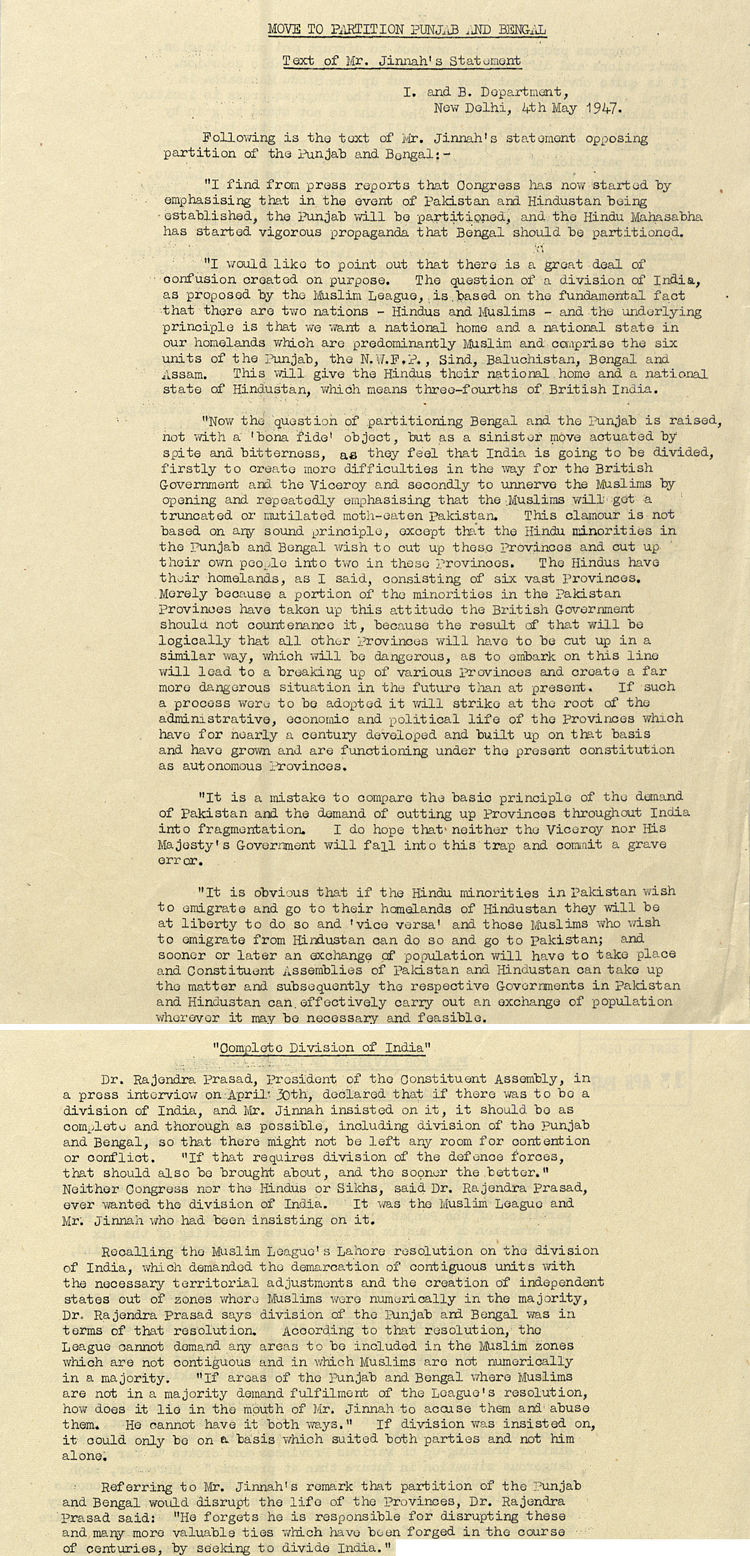
Despite its vociferous campaign Muslim League could not ignite fears of Hindu domination in the support base of Bacha Khan. His comrades won the land mark elections of 1946 with a thumping majority. He opposed the Partition on the basis of religion, but it happened. His democratically elected government was dismissed 8 days after the independence, on 22 August, 1947 when Quaid-e-Azam Muhammad Ali Jinnah was the Governor General and Liaqat Ali Khan was the Prime Minister.

Nawabzada Liaqat Ali Khan was five-years younger to Bacha Khan. He was born in 1895 to a Muslim aristocrat family whose jagir starting at the eastern edge of Punjab (now Haryana) stretched into Uttar Pradesh. His family had cordial relations with the British. Some say the family gained fortunes and earned intimacy with the Raj, when his grandfather extended support to the British during the hard times of 1857. His father earned many a titles and honors too.

Liaqat Ali went to Aligarh and then to Oxford. On his return from London in 1923, he joined Muslim League. He contested his first elections in 1926 on a seat reserved for Muslims in the UP Assembly (Muzaffarnagar constituency) and comfortably won. He grew into an eloquent parliamentarian, pleading mostly for the causes of Muslim landlords who were a minority in that province.

He became one of the most important members of the Muslim League’s vanguard. Nawabzada is, in fact, credited to have convinced a dejected and disappointed Muhammad Ali Jinnah to end his ‘self-imposed exile’ in London and lead the movement for a separate homeland for Muslims. Liaqat Ali Khan was made the General Secretary of the Muslim League in 1936.

The party’s parliamentary committee did not award him the ticket for the 1936 elections for his home constituency which he valued highly. Despite holding a high office in the Muslim League, he contested as an independent from his home constituency and faced criticism of fellow party men.

He contested the 1946 elections for the Central Legislative Assembly on the Muslim seat of Meerut that is situated in Uttar Pradesh. Following this victory, Nawabzada won a place in the Constituent Assembly of Pakistan and at independence was made the first Prime Minister with the additional charge of Foreign Affairs and Commonwealth Relations and Defense. He remained the longest serving prime minister in the history of Pakistan till Yousuf Raza Gilani exceeded him by a few weeks recently.

Prime Minister Liaqat Ali is accredited with a number of ground breaking contributions. He decided to ally with the US in the Cold War divide; quashed a coup attempt by communists; promoted General Ayub to the highest rank and fought a war with India over Kashmir to name just a select few. His government ruled on ad hoc basis under temporary laws as it could not formulate and build a consensus on a constitution for the country.

Reasons were simple. They could not dig out a monarchy to rule the country nor could they install a Caliph. The constitution has to be based on democracy. But the problem was that Meerut was now in India. The most powerful Prime Minister serving for one of the longest periods in the history of Pakistan had no constituency in the country to contest elections from. A committed democrat and an active parliamentarian, he  knew well that he and his political class had no, or at best a very shaky, future under a democracy. In contrast, Bacha Khan’s was a completely secure political position. It was impossible to democratically uproot him from his constituency. He had voters, volunteers and diehard loyalists.

The ad hoc powers were thus used to change the rules of the game.

Six months after the death of Muhammad Ali Jinnah, Prime Minister Liaqat Ali Khan moved the Objective Resolution in the Constituent Assembly that introduced Islam as the raison d’être of the new country. Religion was pitched against ones linguistic and cultural identity and faith was made to rival political interests. Those loving their culture, defending their language and demanding their democratic and political rights on these bases became heretics conspiring against the last citadel of Islam in the Subcontinent. Ideological boundaries of the country became more important than the limits of electoral constituencies and principles of democracy were contrasted to injunctions of Islam as defined by the select ulema.

Bacha Khan who enjoyed a hard earned and unflinching popular support in a vast constituency went down in our official gazettes as an anti-Pakistan traitor. Red Shirts were hounded and hunted. Politicians were jailed and elections were rigged.

By declaring the entire country as one constituency and setting ones perceived Islamic credentials as the only qualification, Liaqat Ali Khan tried to create a constituency for his class – the politically insecure Muslim elite that had migrated from the Muslim minority provinces of India. But ironically, they could not sustain their hold on this constituency for long. Within a decade they were outdone by the Army in the game they had pioneered. They were declared incapable of defending the citadel of Islam. The army took over the ‘responsibility’ of keeping the country united in the name of Islam and secure from the conspirators who had strong democratic constituencies in the country.

The army did not feel the need to redraft the national narrative that was scripted in those initial years. It was found to be in perfect harmony with the Army’s own scheme to block or cripple democracy and sustain its direct or indirect rule for decades to come. The narrative persists with all its detail and corollaries and insists on its refusal to recognise Bacha Khan as a great national hero.

Thursday, 16 August 2012

The Road to Pakistan

Partition: I include this reflection on partition and the emergence of Pakistan. It draws on the points that were made in the previous posting. Importantly it argues that the reasons for Pakistan were less to do with religion itself, but the preservation of the privileges of a narrow band of landed aristocrats.
Before the 1940s, the membership of Muslim League was solely comprised of non-practicing Muslim landed aristocracy. They had enjoyed fruits of British colonialism, who had bestowed upon them fiefdoms on which they had lorded over. They never wanted Independence from British, whom they considered taller, fairer and worthier rulers. Indeed, Muslim League consistently opposed India's independence, never took part in any agitation, or launched any significant mass movement. They were very comfortable with the status-quo.

The arrival of Mohandas Karamchand Gandhi changed everything. He transformed the independence movement from a debating society to a mass mobilization. He injected his own brand of socialism into the movement. This scared the the Muslim as well as Hindu zamindars. They knew that if British left, their titles will be abolished and land distributed amongst the poor farmers on whom they had preyed upon in the past. The Hindu feudals were complete marginalized by the Congress. However, the non-practicing Muslim feudals launched the movement for Pakistan.


Aside from the landed aristocracy, until 1940s, the majority of Indian Muslims as well as Muslim scholars opposed the creation of Pakistan. . They opposed Pakistan Movement not because they supported secularism. On the contrary, they opposed it because they genuinely believed that the Pakistan's creation would hurt their long-term objective of spreading Islam in India through Da'wah. Even Maulana Maududi objected to Pakistan. Nevertheless, after the Pakistan movement gained momentum, the majority of Muslims voted for the Muslim League led by Mohammad Ali Jinnah whose slogan was 'Pakistan ka matlab kya. La ilaha illallah' over the Congress Party which was under the leadership of Pandit Jawaharlal Nehru and Mahatma Gandhi.

Pakistan's creation was thus an accident of history. As I explained above, the Muslim aristocracy was afraid of losing their undeserved wealth, so they demanded disproportional representation for Muslims, in the legislative assemblies to preserve their privileges, anticipating that the illiterate, poor Muslim masses would be easily manipulated by the use of religious rhetoric. Thus, Pakistan Movement was meant as a bargaining chip, they had no intention of going through with it. There was no actual partition or post-partition plan. Indian National Congress called Muslim League's bluff. Jinnah called for Direct Action Day in August 1946 as a show of strength of Muslims. Wide-spread communal riots first in Bengal then in other parts of India followed. From that day onwards, because of the hatred that ensued, Pakistan was fait accompali. The partition was ensured whether Muslim League leaders wanted it or not. 

This lack of planning is the reason why Pakistan has stumbled from one political crisis to another since its inception, and it took almost 10 years to frame Pakistani constitution (which would later be mutilated multiple times). And, unlike India, no land redistribution took place in Pakistan. The secular non-practicing Muslim aristocrats have new fiefdoms to lord over in Pakistan.

Indeed on his deathbed Mr. Jinnah admitted that he had committed a great blunder by creating a "mutilated, moth-eaten" Pakistan.
Drona, August 2012. PashtunForums 

For additional reading see the follow-up post: Two Muslim Theory

Wednesday, 15 August 2012

Partition: 1947

This post coincides with the 65th anniversary of 'Independence' - that point in 1947 marking the end of the British Raj and the division of the Indian subcontinent into the Union of India and the Dominion of Pakistan. The entire subject remain complex though over the next couple of posts, I hope to explore a few thoughts and opinions on the matter. In this post I begin by starting with a brief history.


British Colonial administration did not directly rule all of "India". There were several different political arrangements: Provinces were ruled directly and the Princely States had varying legal independent arrangements.The Indian National Congress formed in 1884 by a mixture of Indian (Hindu and Muslim) and English activists led for the initial calls to have more Indian representation within the administration.

By 1906 the All India Muslim League had been formed in Dhaka in reaction to what some elite Muslims viewed as Hindu dominance in Congress. As the appeal of Mohandas Gandhi and the Free India movement increased, a number of different scenarios were proposed. Amongst the first to make the demand for a separate state was the philosopher Allama Iqbal, who, in his presidential address to the 1930 convention of the Muslim League, proposed a separate nation for Muslims.

The 1946 Cabinet Mission aimed to reach an agreement between Congress and the Muslim League amid growing tension. Nehru, leading Congress was unwilling to accept a decentralised state and Jinnah, leading the Muslim League (made up largely of the 'secular' landed Muslim elite) returned a demand for Pakistan as a bargaining chip. Initially most Muslims opposed partition and there was no pre or post Pakistan 'plan' right up to the announcement in June 1947 that the British had set a date for handover.

Religious communalism fuelled the British decision to exit early (Lord Louis Mountbatten having just been made Viceroy of India in February 1947) and sealed - by accident - the decision to partition the subcontinent. Sir Cyril Radcliffe never having visited India before was employed to draw the boundaries between the two states in July 1947 five weeks before the end of British rule. On August 15 1947, India was granted her independence, and Pakistan the day before. Note, this was before Radcliffe Boundary Committee had made the announcement on the boundaries and before either country knew their borders. Significantly, partition led to the biggest sudden movement of people in human history  - with up to 12 to 15 million people uprooted within a short period and the after effects felt for years.

More in my next postings ...

Monday, 6 August 2012

Coming of the Crowds

My voice rings out, this time, from Damascus
It rings out from the house of my mother and father

Morally speaking, I do not think that we can really disconnect ourselves from politics - but the problem with politics is the disconnect between the perceptions of those who lead and those whom they claim to serve. I believe that my cynicism can be applied universally to all politics, though increasingly and rather specifically the Syrian leader, Bashar Al Assad has not recognised the winds of change in the neighbourhood.  What we appear to be witnessing is a repeat situation of the type leadership that is guided by its own ego and vanity whilst Syria continues to tumble downwards in an erratic free fall. It is true that the world covertly intervenes by offering moral support to the Free Syrian Army and many regional and international saboteurs are likely to hijack the process with the likely scenario that the said leadership will fail to act on the inevitable and will continue to attempt to quell opposition voices with armed brutality. Few, who see clearly, would choose to go to war with their own people, so ultimately Bashar Al Assad's actions appear to spell fatality. At this stage, Allah knows best of course, but it seems that the moral responsibility seems to be with the crowds and not those in power, be that the regime or those intervening. Real power, as witnessed by the Arab Spring and its continuing after effects, lies with the people.

Thinking about the region, we only need to cast some thought back to when Saddam Hussain was ousted after years of resistance and the euphoria that ensued after the fall of Muammar Gaddafi, Hosni Mubarak etc. The headlines were typically jubilant - another 'fallen dictator'; 'victory to the people'; 'freedom' and a 'new beginning'. There was a strong sentiment amongst the people of these places that led them to rebellion and in the background the media has had a key role. Whilst the media is drawn to the suffering to make its headlines; foreign political movers and shakers make mileage out of this. Again, the morality of those within politics is sometimes up for question.

Significantly, post the celebrations, many revolutions are followed by a period of public disorder and shaky security. How long this goes on for and how long the international political goodwill towards the revolutionaries lasts varies. In general, the track record is not optimistic. Even after successive fallen governments across the middle east and beyond; we still question whether the world is safer and people are more prosperous as a result. Often the corruption of a few within a police state, is replaced by a break-down/free for all by the masses.

What now happens in Syria over the coming period remains yet to be seen. It is Ramadhan - and technically a month of peace when Muslims should put down their arms and focus on the spiritual. 

Wednesday, 25 July 2012

Letter to Blair Inc.


We seem to thrive on fear and this is especially true of what many 'westerners' think when it comes to what the Islamic world represents. Whilst the Islamic world has certainly had a past cultural glory when it made contributions to the arts, mathematics and sciences, even with this, there's the historical record of western prejudice against Muslims (see Orientalism). So whether one's opinions originate from a historic Christian set of values or a modern liberal or politically Eurocentric set of values, there is likely to be some point of difference/conflict with a given view in Islam. Adding to that the fear mongering, as in the interview here, and the type of responses that it provokes invariably there is a lack of a balanced and thoughtful judgement when it comes to Muslim-Christian (read 'western') relations.

In this interview with The Telegraph, former British Prime Minister Tony Blair continues to peddle the same old fear with his opinions on 'militant Islam'. I am not going to deny the marginalisation and subsequent radicalisation of Muslims and nor do I excuse it. It is wrong in fact - but one needs to consider the historical relationships of the east and the west to understand why differing sides are often caught up in conflict. A deep misunderstanding and fear continues to inform the way Islam is perceived and both the west and the Muslim world need to self-reflect to consider how their own actions affect the other. I will say however, for there to be a meaningful dialogue that the major need for self reflection vis-à-vis the other should come from 'Christian' west, who must come to terms with their own historical bias and personal animosity.

This might have nothing to do with how he feels, but Tony Blair is a 'new' Catholic and without doubt, a career politician. He knows how to draw attention to the fears/thoughts of middle England and exploit them for his own purposes. I wonder, if many readers of commentators on The Telegraph interview realised that Tony Blair's sister-in-law, Lauren Booth, is in fact, a Muslim? (She spent time in Iran). Mr Blair, himself is now, a somewhat lacklustre international figure. He has, by all accounts, been a low-impact UN peace envoy to the middle east and all indications are that he has profited healthily from this 'unpaid' position. 

Just goes to show, that with a little manipulation, the old forms of hatred and bigotry surface in order to wage contemporary political battles.

Image Credits: ShaneBertou

Friday, 6 January 2012

Tweet and Rule

Twitter: I'm not a regular tweeter and nor do I avidly follow the tweets of the rich and supposedly famous-and-interesting. I sometimes tweet stories of interest and I occasionally get a notice that someone would like to follow my tweets. This usually prompts me to go back and see who might be interested, and though I can claim to be on Twitter so as not to sound disconnected, this is about as active as I am :). Perhaps at some point I may join up more of my various on-line activities though my current logic is that I don't want my entire life lived on-line. There have to be some elements to life that can be lived non-digitally. 

... And so perhaps there are moments like now when people like Diane Abbot may wish that too. I guess an MP's life is lived pretty much in the public domain and their choices and their words occupy a public space that makes what they say common property. The furore over Ms Abbot's tweet today, may be over blown and way out of proportion given the more important story of Stephen Lawrence but somehow it is now a big enough news story to have led to a formal apology. So what exactly did Diane Abbot tweet and what has led to this row? Well, apparently, the words ''White people love playing 'divide & rule'" have not gone down well by some media watchers and her fellow Labour politicians. Ms Abbot's party leader, the rather nondescript gentleman Ed Miliband, is reportedly outraged and has issued her a warning.

Perhaps in PC Britain, it is difficult to make a statement like she did and get away with it, but if she is speaking from a from a European colonial historical perspective, is she wrong to say this? And is she being vilified for the guilt that others feel? When it is clear that for too long the police response and the subsequent investigation into Stephen Lawrence's death has been mired with accusations of institutional racism, symptoms of confusion and embarrassment are likely to hang heavily in the public mood. Did Diane Abbot overlook the sensitivities of this or is there a ring of historical truth to her words? Did the timing of her tweet and the guilt and incompetence around the Stephen Lawrence case come together to hit a genuinely public raw nerve? 

Read more about Stephen Lawrence.

Sunday, 16 October 2011

We Are the 99 Percent

The Occupy Wall Street Campaign and the movements inspired by the anti-corporate agenda is led by that sense that we are so marginalised and unable to affect positive change that our futures appear to be little short of staring into the abyss of hopelessness. Sit-ins, protests and demonstrations have been replicated around the globe against what the organisers consider to be the economic misfortuntues caused by a global recession that is directly linked to government policies and banking instutions driven by greed. (Read more here). Consider this from the We are the 99 percent blog:
We are the 99 percent. We are getting kicked out of our homes. We are forced to choose between groceries and rent. We are denied quality medical care. We are suffering from environmental pollution. We are working long hours for little pay and no rights, if we're working at all. We are getting nothing while the other 1 percent is getting everything. We are the 99 percent
Today is World Food Day. In an age where there is plenty, the statistic that 1 billion people - that is 1 in 7 are still unable to feed themsleves due to global economic policies is without a doubt, a humanitarian outrage. We should, by all accounts be angry.

Related Posts Plugin for WordPress, Blogger...